
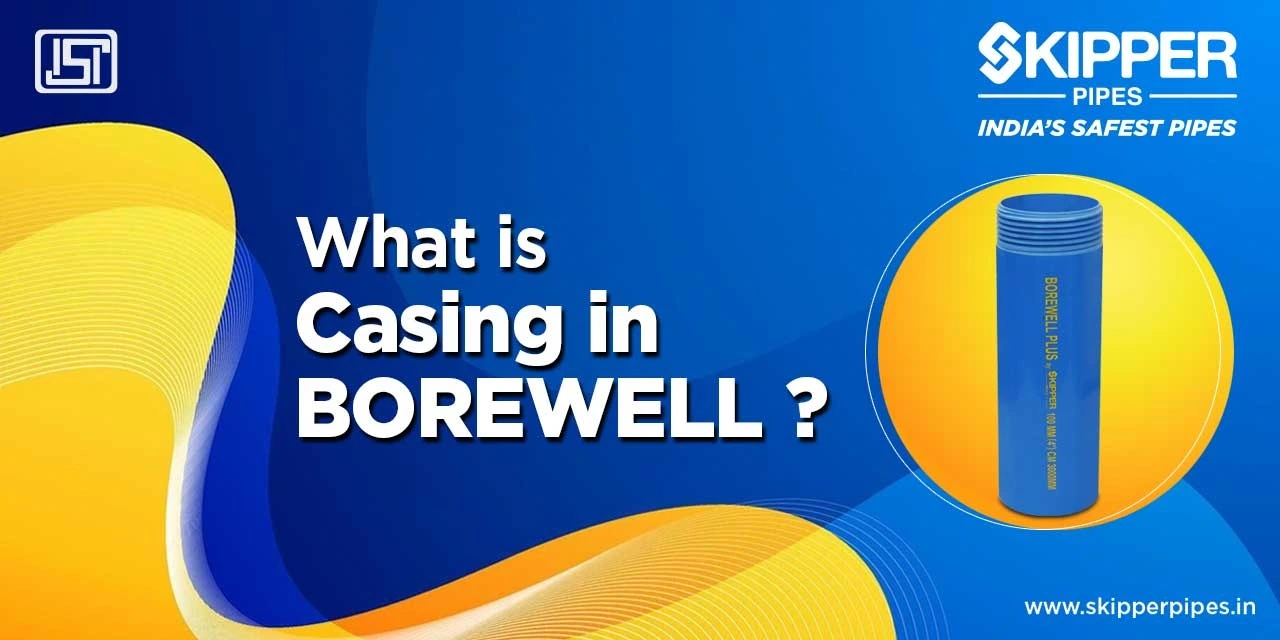
What Is Casing in a Borewell? Types & Importance
A borewell is considered one of the most reliable sources of groundwater for domestic, agricultural, and industrial use. But the mere presence of a borehole will not guarantee the availability of water for a long period of time.
Perhaps one of the most critical elements in a borehole installation is the casing pipe. Knowing what casing is, why it is used, and which is the best material will help increase the borewell life, water quality, and efficiency.
What is Borewell Casing Pipe?
A borewell casing pipe is a steel pipe that is fitted in the drilled borewell to protect the borewell walls from collapsing soil or rock. The borewell is lined with a casing, which keeps the borewell clear and stable.
In simple words, casing is a shield that is laid to keep the borewell structurally sound and functional for years to come.
For a borewell, casing is used to drill the hole in the ground. Usually, these casing pipes are installed during or immediately after drilling. It may be of PVC, UPVC, or steel pipe, depending upon the requirement, application, and soil condition.
Why is Casing Pipe Used in Borewell?
Casing pipes serve multiple important purposes in a borewell system. Without proper casing, the borewell may collapse, get contaminated, or lose efficiency over time.
1. Prevents borewell collapse
The bore can cave in without any warning after drilling loose soil, sand, and fractured rocks. The casing pipe rests against the wall to brace the bore.
2. Protects Water Quality
The casing is used to keep the surface dirt and debris, mud, and other undesired matter from entering the groundwater supply. This would make the water cleaner.
3. Improves Borewell Life
A borewell, which is cased correctly, will not be subjected to as much erosion or damage and will have a longer service life.
4. Supports Pump Installation
The casing brings a smooth, watertight interior surface on which all the submersible pumps and equipment are installed.
5. Prevents Soil Erosion
In poor formations, casing pipes can prevent the soil around the borewell from being washed away.
Borewell Casing Pipe Installation
The installation process of the borewell casing pipe also has an influence on the geological conditions and the bore depth. The typical installation process is like this:
Step 1: Drilling the Borewell
Using borewell drilling equipment, the ground is bored to the necessary depth.
Step 2: Identifying Soil Conditions
The driller tests if the soil is loose, sandy, rocky, or hard. This determines what type & length of casing will be used.
Step 3: Installing the Casing Pipe
The casing pipe is run into the drilled bore. Joints are made, joining the pipe sections together to provide a continuous lining.
Step 4: Sealing and Stabilizing
This annulus between the borewall and casing can be sealed by gravel or cement slurry for added support.
Step 5: Pump Installation
Once the casing is complete, the submersible pump and pipeline systems can be installed.
Correct installation is vital due to the problems posed by improperly fitted casing, which include contamination of groundwater and instability.
How Much Casing is Required for a Borewell?
The following factors mostly determine how much casing is needed:
- The state of the soil
- Borewell depth
- The level of groundwater
- Rock formation
- Bore collapse risk
Interestingly, casing is usually only needed up to the loose soils in the upper parts. Once a stable hard rock formation is reached, there may be no reason to add the casing.
For example:
- For rocky ground, casing may be required for just 2040 ft.
- In sandy or loose soil conditions, the casing can go down very far.
- When it comes to certain deep borewells, casings have to be installed throughout the entire length to provide complete shelter.
The precise length of the casing is normally determined by the professional borewell contractor himself after assessing the drilling ground conditions.
The selection of suitable casing pipe for a borewell depends on factors like durability, corrosion resistance, and cost beyond groundwater quality.
PVC and UPVC casing pipes are largely preferred alternatives to conventional steel casing pipes these days because of their long-term benefits.
PVC/UPVC Borewell Casing Pipes
PVC casing pipe: BT specification casing pipes are used widely in house, farm, and commercial borewells.
Advantages of PVC Casing Pipes:
- Corrosion resistant
- Mechanical and light, simple installation
- Exterior smooth internal:
- Extended durability of service
- Low maintenance
- Cost-effective
- Chemically resistant to groundwater minerals.
Because of these features, PVC and UPVC pipes have become one of the most widely used piping materials in the modern borewell system.
Steel Borewell Casing Pipes
Steel-cased pipes were traditionally used for deep and heavy-duty borewells.
Advantages of Steel Casing:
- High mechanical strength
- Suitable for extremely deep drilling conditions
- Performs well under heavy external pressure
However, steel pipes also come with several limitations.
PVC vs Steel Well Casing: Which is Better?
One of the most common questions in borewell construction is whether PVC or steel casing is better.
PVC Well Casing
PVC casing pipes are preferred in most modern applications because they are:
- Rust-free
- Lightweight
- Easy to transport
- More economical
- Resistant to chemical reactions
- Long-lasting in groundwater environments
Steel Well Casing
Steel casing pipes may still be used in highly demanding drilling conditions, but they have some disadvantages:
- Prone to rust and corrosion
- Higher installation cost
- Heavier material handling
- More expensive maintenance
- Shorter life in corrosive groundwater conditions
In many situations, PVC casing pipes offer a better balance of durability, efficiency, and affordability.
What is the best casing for a 350-foot borehole?
Since the borewell will be about 350 feet deeper, casing is determined based on the upthrust on the formation.
The type of casing for a 350-foot borewell can be determined based on the geological conditions at the site:
- UPVC casing pipes are normally chosen, as it has corrosion resistance and durability.
- In softer formations, the casing is set through the unconsolidated zone until a hard formation is encountered.
- In very difficult environments or industrious drilling operations, steel casing could be used as reinforcement.
A professional site assessment is always recommended before selecting casing material and depth.
Disadvantages of Casing Pipe
Casing pipes are essential for borewell protection, but certain challenges may arise if incorrect materials or poor installation methods are used.
Common disadvantages include the following:
- Higher initial installation cost
- Improper fitting may reduce borewell efficiency.
- Poor-quality casing can crack or deform.
- Steel casing may corrode over time.
- Inadequate casing depth can lead to collapse
Most of these issues can be avoided by selecting high-quality pipes and ensuring professional installation.
Why Choose Skipper Borewell Casing Pipes?
As far as dependable solutions are concerned, the quality of casing pipes is of major concern after the right drilling and additional services. Skipper Limited truly believes in providing strong and high-quality borewell casing pipe solutions with the latest technology and high-strength material available for domestic, agricultural, and industrial uses.
Key Features of Skipper Borewell Pipes
- Produced with premium raw material for durability, it would provide a longer service life.
- Very good corrosion, rust, and chemical resistance
- Structural stability for different soils and groundwater levels.
- Less weight to facilitate handling and ease of installation
- Inner surface is very smooth and would not cause head loss and energy loss.
Skipper borewell casing pipes are engineered to deliver durability and dependable performance even in challenging environments, making them a trusted choice for modern water infrastructure needs.
Whether for agricultural irrigation, domestic water supply, or industrial usage, Skipper’s piping solutions help ensure safer, cleaner, and more efficient groundwater management.
Conclusion
Borewell casing in bores offers the safety, stability, and efficiency of the borewell system. Casing pipes are one of the integral parts of the borewell system, which prevent bore collapse and groundwater pollution.
Nowadays, PVC and UPVC casing pipes are becoming more popular, as they have corrosion-resistant properties, are lighter weight, are economical, and have a longer life span.
Although steel casing can be recommended for some special tough condition borewells, the modern PVC casing pipe can provide unswerving service for most of the borewell applications (home, commercial, and agricultural applications). Selecting the right borewell casing pipe and installing it properly can really help maximize your borewell life and productivity.
Leave a comment