
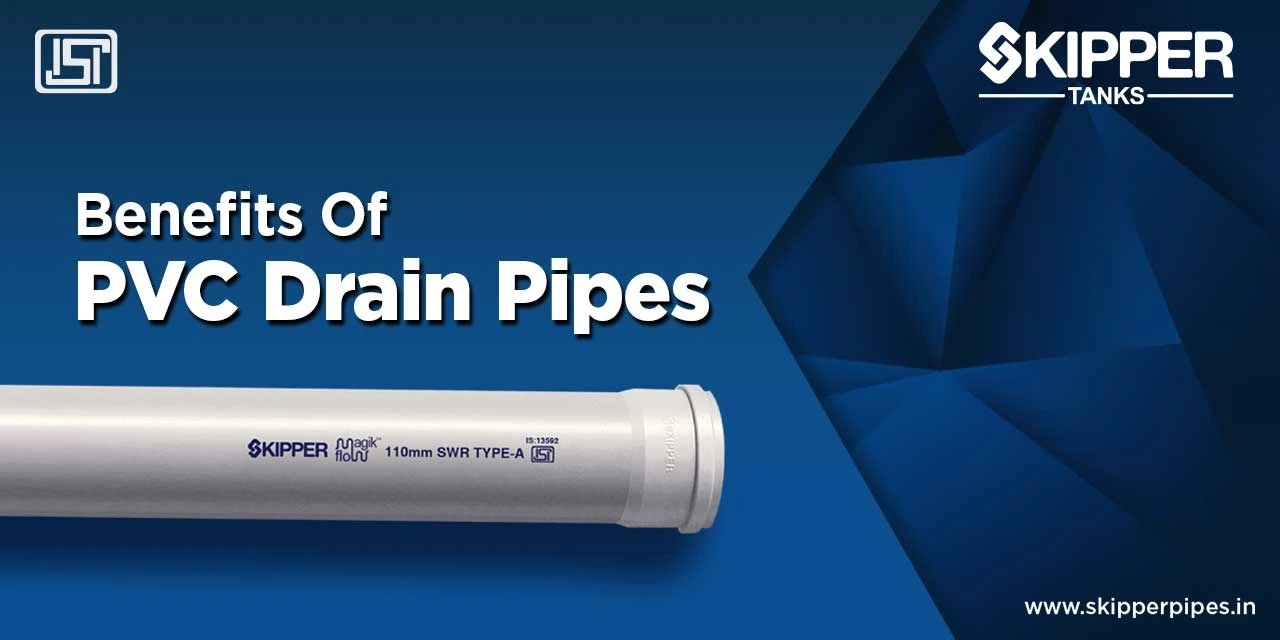
What Are PVC Drain Pipes? (Detailed Explanation)
People usually think of "PVC drain pipes" as a type of plastic pipe mainly used for drainage systems, not for delivering drinking water. Although the name sounds broad, in reality, the term is quite specifically related to uPVC (unplasticized polyvinyl chloride) pipes and SWR (soil, waste, and rainwater) pipes, especially in India.
It is helpful to know what PVC drain pipes mean since different kinds of pipes are made for different uses. If you use the wrong one, you might get leakage, the pipe won't last, or you might even face health problems. Hence, let's simplify and clarify it.
What Are "PVC Drain Pipes" Usually?
1. uPVC Pipes (Unplasticized PVC)
The first thing that is thought of in case of PVC drain pipes is the uPVC pipes. These are solid, durable plastic pipes without plasticizers, which is why they are structurally sound and long-lasting.
uPVC pipes have a very large number of applications and are used mainly for:
- Drainage systems in bathrooms
- Waste lines in the kitchen
- Discharge of soil and waste
- Pipes for ventilation
- The dumping of rainwater
Besides that, they have the following features,, which make them highly preferred:
- Very light, and also installation is very easy.
- They do not get corroded even on contact with chemicals.
- They are very durable and require very little maintenance.
- Their price is not very high compared to metal pipes.
Because drainage systems often carry wastewater that may contain chemicals, grease, or debris, uPVC’s resistance to corrosion makes it an ideal choice.
2. SWR Pipes (Soil, Waste & Rainwater Pipes)
Another major type of PVC drain pipe is SWR pipe. These can be considered a kind of uPVC pipe, only that SWR pipes are mainly intended for building drainage systems.
SWR pipes are suitable for the following:
- Toilet waste disposal units
- Sink and bathroom wastewater
- Rainwater pipes in the building
- External drainage lines
SWR pipes are somewhat different because of their structure. They usually feature:
- Watertight joint systems (such as rubber ring fittings)
- Greater load capacity
- Improved flow efficiency
Nowadays, SWR systems are commonly used in residential and commercial drainage, as they offer effective and hygienic waste disposal.
3. Underground PVC Drainage Pipes
In addition to the lighter types of PVC pipes, heavy-duty PVC drain pipes are also used underground and can be found in sewer systems or large drainage networks.
Their characteristics are:
- They have a thicker wall and higher mechanical strength over the usual uPVC pipes
- They are capable of resisting soil pressure and external loads
- Their application areas include underground sewer and municipal drainage lines
Typical uses are
- Connections between buildings and sewers (large-scale)
- Commercial or residential projects
- Infrastructure drainage systems
What PVC Drain Pipes Do NOT Include
Many people mistakenly think that all PVC pipes are the same. Not so. PVC drain pipes are mainly for drainage and exclude pipes used for potable (drinking) water, or hot water systems.
To further understand, let us give some instances of what PVC drain pipes do NOT refer to:
1. CPVC Pipes
CPVC pipes are mainly used for hot and cold water supplies, especially for drinking water, whereas drainage pipes are normally not designed to withstand hot temperatures.
2. Pressure Pipes for Water Supply
Some uPVC pipes are used for water supply under pressure, but these are different from drainage pipes. Drain pipes are usually non-pressure systems.
3. HDPE Pipes
HDPE pipes belong to another category and are used in different types of applications such as industrial pipelines or large-scale water transport.
Why PVC Pipes Are Ideal for Drainage
There are several reasons why PVC drain pipes are very popular. The good thing is that they have properties that make waste and drainage systems perfect.
The main benefits are the following:
1. Corrosion Resistance
Unlike metal pipes, PVC does not rust or corrode when exposed to moisture, chemicals, or wastewater.
2. Smooth Inner Surface
The smooth inner surface of PVC pipes facilitates
- Faster flow of water
- Reduced chances of blockage
- Better hygiene
3. Lightweight and Easy Installation
Since PVC pipes are very light and installation is easy, it saves both labor time and costs.
4. Cost-Effective
PVC pipes are cheaper than other traditional materials, e.g., cast iron, and also give long-term durability.
5. Long Life With Minimal Maintenance
PVC drainage systems are known to last for several decades, even though they are minimally maintained.
Simple Way to Understand
If you want to break it down to basics, use a simple analogy:
PVC drain pipes = uPVC or SWR pipes, which are the types of pipes to take away wastewater, sewage, and rainwater from a house.
They are not pipes for drinking water, and they are specially made for effective and safe drainage.
Conclusion
"PVC drain pipes" is really a shorthand way of referring to the piping systems uPVC and SWR that are the main types of PVC used for drainage applications.
These pipes are very important for keeping homes, buildings, and cities clean and for proper waste disposal. Picking the right kind of pipe is key to having lasting, effective, and safe pipes. Knowing exactly what PVC drain pipes stand for will help you choose plumbing systems wisely, be it for a home, a construction project, or a video/blog/content piece creation.
Leave a comment