
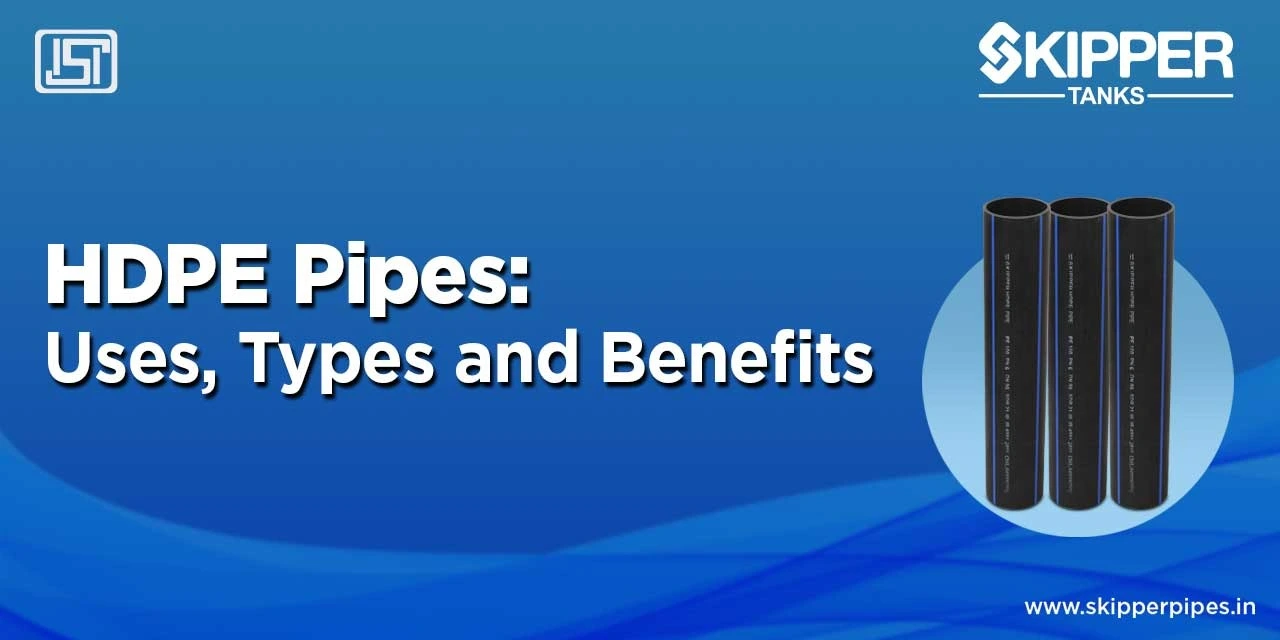
HDPE Pipes: Types, Uses and Key Benefits
HDPE (High-Density Polyethylene) pipes are among the top-line piping solutions available today, being used in agriculture, water supply, and other industrial sectors. Due to their ruggedness, flexibility, and non-corrosive nature, HDPE pipes have come to offer the most favorable alternative to metal and PVC pipes of the traditional variety.
In case you are looking into pipe materials, a knowledge of different kinds of HDPE pipes, their dimensions, grades, and applications will equip you to make a well-grounded choice.
What are HDPE pipes?
HDPE pipes are constructed of a thermoplastic polymer that is not only very strong in terms of tension but also capable of lasting for a long time. In comparison to the traditional ones, HDPE pipes do not rust, corrode, or degrade easily, which is a plus for their use both underground and above ground.
They are engineered to resist harsh environmental factors such as temperature changes, chemical contact, and pressure changes.
Types of HDPE Pipes
HDPE pipes can be classified based on material grade and their structural design:
1. According to the Material Grade
- PE 63: These are the pipes of an older generation; having lower strength, they are rarely used nowadays.
- PE 80: These pipes possess a moderate strength and will be good for medium-pressure applications.
- PE 100: Pipes of very high strength, which are perfect for high-pressure and critically demanding applications.
2. Based on Structure
- Single-Wall HDPE Pipes: Usually used for supplying water, irrigation, and borewell systems
- Double Wall Corrugated (DWC) Pipes: Ideal for drainage and sewage systems as they can bear heavy loads
HDPE Pipe Sizes and Classes
Various sizes of HDPE pipes are manufactured, the diameter of which generally varies from 20 mm to 1200 mm, depending on the nature of the use.
They are also classified by pressure ratings, known as PN (Pressure Nominal):
- PN 6
- PN 8
- PN 10
- PN 12.5
- PN 16
A higher PN rating indicates the pipe’s ability to withstand greater internal pressure.
What is PN and PE in HDPE Pipes?
It is important to grasp the meanings of these two terms:
- PE (Polyethylene Grade): This refers to the strength of the material (PE 63, PE 80, PE 100).
- PN (Pressure Nominal): This shows the pressure-carrying capacity of the pipe
Thus, a PE 100 PN 16 pipe is more robust and hence a better choice for high-pressure applications than a PE 80 PN 10 pipe.
Which Grade of HDPE Pipe is Best?
PE 100 is one of the grades of HDPE pipes. When compared to other pipe materials, they offer the highest strength, durability, and service life.
Thus, PE 100 grade pipes are the best choice for :
- High-pressure water supply systems
- Agricultural irrigation
- Borewell installations
To find a thorough explanation of the factors that you should consider in a pipe purchase, you may read the HDPE pipe buyer's guide blog.
Which HDPE pipe is best for a borewell?
When choosing the right HDPE pipe for borewell use, one's selection would greatly affect the long-term performance and safety of the system.
Two of the most important considerations to look at are the following:
- PE 100 grade pipes
- Higher pressure class (PN 12.5 or PN 16)
It is these pipes that are able to handle the pressure of a borewell installation at a great depth, stay reliable for extended water supply, and resist soil pressure from outside, making them the best choice for borewell and submersible pump systems.
What is the difference between SDR 17 and SDR 11 HDPE?
SDR (Standard Dimension Ratio) is the term for the ratio between the pipe's diameter and the thickness of its walls.
- SDR 11: Thicker walls, capable of handling higher pressures
- SDR 17: Thinner walls, meant for usage in lower-pressure environments
Should you need to work with a high-pressure situation (borewells or main water supply lines), SDR 11 would be the right choice for you.
Key Benefits of HDPE Pipes
HDPE pipes are preferred to cast iron and other traditional piping systems due to the following reasons: -
- Corrosion Resistance: They cannot rust or scale over time
- Durable: Under proper application, they can live for over 50 years
- Flexible: They can handle ground movement and pressure changes
- Leak-Proof Joints: Lead to negligible water loss
- Chemical Resistance: Can be used in industry
- Light in weight: Simple to move and install
Applications of HDPE Pipes
HDPE pipes are extensively utilized in many different industries:
- Irrigation systems for agriculture
- Submersible pipework and borewells
- Connections that supply drinking water
- Transmission of industrial fluids
- Sewage and drainage systems
Why Choose Skipper HDPE Pipes?
Skipper HDPE pipes are your best bet when it comes to reliability and performance. They are created using the very latest technology and the best quality raw materials to guarantee top quality and to deliver reliable performance consistently.
Skipper HDPE pipes:
- They are manufactured using top-quality PE grades for better durability
- Have the capability to be used for high-pressure and tough environmental conditions
- Comply with the safety and performance standards of the industry
- They are very versatile and can be used in agriculture, infrastructure, and industrial areas
With a strong focus on innovation and quality, Skipper delivers piping solutions that ensure long-term efficiency and peace of mind.
Conclusion
HDPE pipes represent a solution that is ready for the future to cover water management and other infrastructure needs. When you know what types, grades, sizes, and pressure classes are available, you can pick the right pipe for your particular use.
Relying on a reputable brand such as Skipper will guarantee that your piping installation will be safe, long-lasting, and perform at a high level over the years.
Leave a comment