
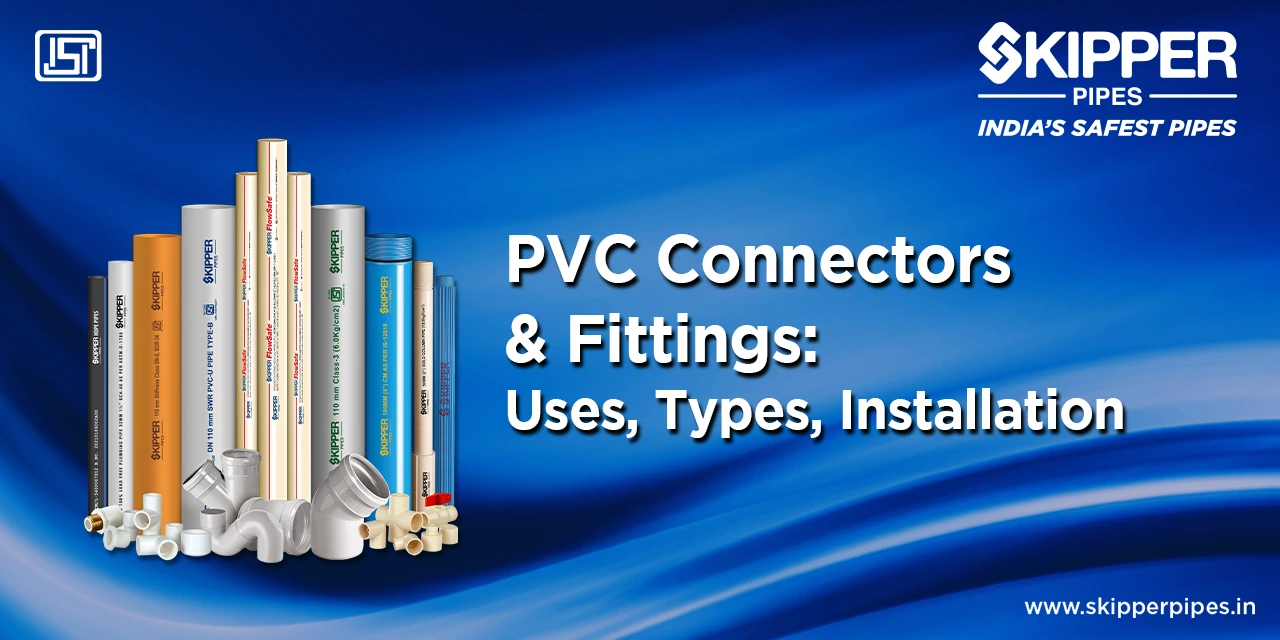
PVC Connectors and Fittings: Uses, Types, and How to Install Them
In the context of modern plumbing, irrigation, and building, PVC connectors alongside PVC pipe fittings are now the top preference of both professionals and DIYers. They are easy to handle, do not rust, are a snap to put in, and are a cheap option. If you are installing a water line in your home or about to fix an existing one, a good knowledge of how these fittings function will be of great help in saving your time, energy, and money.
We start at the very beginning in our article: what PVC connectors are, their types, their uses, and how to connect two PVC pipes the right way
What Are PVC Connectors?
PVC connectors (or PVC pipe connectors) are basically the items used for connecting two or more PVC pipes together. They create such a tight connection that it guarantees water, chemicals, or air flow without leakage.
To be honest, these fittings are shaped and sized differently depending upon the direction, angle, or style of connection needed
Why are PVC connectors important?
- They can hold the structure together even if there is a lot of pressure.
- By preventing leaks and corrosion, they are a great help in cutting down the maintenance costs.
- They give flexibility for small residential fixes as well as large industrial networks.
The Four Main Types of PVC Connectors and Fittings
There are several types of PVC pipe fittings, but four of them are the most commonly used across plumbing and construction.
1. PVC Coupling
A coupling is the simplest form of pipe connection. It just joins two pipes of the same diameter together by their ends. So whether you are extending a line, fixing a damaged section, or want to combine two short pieces, this is probably your best friend.
Uses:
- Extending water supply lines
- Repairing damaged pipe sections
- Joining irrigation pipes
2. PVC Elbow
The PVC elbow is a fitting that is usually used to turn the direction of a pipe by 45 or 90 degrees. Without such pieces, all plumbing systems would be only straight lines!
Uses:
- Turning pipelines around corners
- Designing irrigation layouts
- Installing bathrooms or kitchen drainage
3. PVC Tee
As the name suggests, a Tee connector creates a T-shaped pipeline, allowing one line to split into two.
Uses:
- Splitting water flow into multiple outlets
- Creating branch lines for gardens
- Distributing water in tank systems
4. PVC Reducer
When you’re connecting pipes that aren’t the same size, you’ll typically use a PVC reducer to make them fit together properly.
Uses:
- Connecting smaller outlets to larger pipelines
- Reducing pressure for specific outlets
- Joining irrigation pipes of mixed sizes
Other Useful PVC Pipe Connectors
There are other fittings used for more specific needs:
- End Caps: To close the end of a pipe
- Adapters: To switch between threaded and non-threaded pipes
- Unions: Easy disconnection without cutting the pipe
- Cross Fittings: Connect four pipes
- Bushings: Reduce pipe diameter inside fittings
These accessory fittings make PVC one of the most versatile piping materials globally.
Applications of PVC Connectors
PVC connectors are employed in various sectors due to their robustness and multi-functionality.
Plumbing at home
There are plastic pipe connectors in almost every water system of a house, starting from your bathroom and kitchen. They do not get corroded, have a long service life, and are very simple to keep in good condition.
Agriculture & Irrigation:
PVC parts are one of the favorite things of farmers mostly because they can be carried easily and changed quickly. A lot of couplings, tees, and elbows make the long irrigation network construction a piece of cake.
Industrial Piping:
PVC is the material of choice for factory piping of chemicals, gases, and water because it does not change even after being in contact with aggressive substances.
Construction Projects:
Drainage systems, rainwater harvesting lines, and pressure pipes are some of the components that most of the time depend on high-grade PVC connectors.
DIY and Home Projects:
Whether it is a hydroponic system or a garden fountain, PVC parts are astonishingly cherished by the ones who do the work as a hobby.
How to Join Two PVC Pipes (A Simple Guide)
If you’ve ever wondered how to join two PVC pipes, the good news is that it’s a simple process, one that works well even if you’re just getting started.
Tools Needed:
- PVC cutter or hacksaw
- PVC coupling (or desired connector)
- PVC primer
- PVC solvent cement
- Clean cloth
Step 1: Cut the Pipe Neatly
Ensure the ends are straight and smooth. A clean cut ensures a perfect fit.
Step 2: Clean the Ends
Wipe away dust, moisture, or debris.
Step 3: Apply Primer
PVC primer softens the pipe surface so the cement bonds perfectly.
Step 4: Apply Solvent Cement
Coat both the pipe and inside of the fitting. Work quickly—the cement dries fast!
Step 5: Join and Hold
Push the pipe into the connector and twist slightly. Hold for 30 seconds to lock the bond.
Step 6: Let It Cure
Wait at least 15–30 minutes before running water. Full strength is achieved in a few hours.
Why PVC Connectors Are Easy to Work With
- Lightweight: no heavy machinery needed
- Affordable: cheaper than metal fittings
- Long-lasting: resistant to rust, scaling, and chemicals
- Easy to DIY: even beginners can install them
- Eco-friendly choices: Many manufacturers at present recycle PVC
PVC connectors have revolutionized plumbing in that it is easier, safer, and more flexible.
Conclusion
Getting to know the PVC connectors and fittings is one of the best ways to get smart, cost-efficient decisions done. In fact, this also applies to you if you are a plumber, if you are a DIY enthusiast, or if you are a homeowner taking care of repairs. A PVC coupling, elbow, or tee is a different type of connector that has its unique way of supporting the integrity of your pipeline and preventing it from leaking.
Plus, the greatest thing about it is that fitting and fastening them is way easier than most folks would figure.
Leave a comment